Sunday, 7 August 2016

Iran executes Kurdish activists on charges of terrorism

The Iranian authorities executed a number of Kurdish activists accused of involvement in terrorist activities, local sources said on Wednesday.
Human rights activists in the Iranian capital Tehran told ARA News that 29 Kurdish political activists, who have been held for months in the Raja’i prison in Tehran, were executed on charges of terrorism. 
The victims were publicly hanged to death on Wednesday.
“They were convicted on terrorism charges because of participating in political activities against the Iranian regime,” rights activist Riyad Othman told ARA News. 
This comes just two weeks after Iranian security forces arrested over 40 young activists, and executed at least 27 of them. 
“The authorities did not announce the real reason behind the execution of those people. It said they were a group of drug dealers, but this is a baseless charge fabricated to misguide international rights organisations. The victims were political activists and most of them were Kurds,” Iranian Kurdish politician Enwer Mohamadi said.
“We continue to witness these brutal executions in the streets of Iran, while the international community remains unable to take action against this totalitarian regime,” . 
The Iranian regime has executed dozens of opposition activists across the country by hanging them to death in public squares, according to local sources. 
In the meantime, several human rights organisations condemned brutal practices by the Iranian authorities, especially the public execution of opposition figures and civil rights activities.
According to reports, the government of the Islamic Republic of Iran has executed at least 2500 people in the past two years.

Ahwazi: UK Human Rights Report Fails to Mention Ethnic Rights in Iran


Ahwazi human rights advocates are concerned about the latest UK Foreign Office Human Rights report on Iran. While in the past the report always mentioned the plight of the Ahwazi Arabs and the Kurds, now it restrained from doing so. Far from a lapse, Boris Johnson’s negligence to mention the ethnic rights can eventually cause the deterioration of Ahwazi’s state of affairs. Following the end of sanctions on Iran, UK economic interests have turned to the oil industry in Iran, indicating that exports are likely to grow in the near future. For many years now, the Ahwazi Arabs have struggled against the inequity caused by the oil industry in Iran and, in response, they have been violently targeted by the Iranian intelligence officials and security forces. In order to avoid future conflicts, the Ahwazi advocates urge the UK Foreign Office to have a more cautious approach regarding British investments in the region and to acknowledge minority rights as indivisible in their assessments


The UK Foreign Office's latest human rights report on Iran has removed all mention of ethnic rights in a move of blatant appeasement by Foreign Secretary Boris Johnson, according to Ahwazi activists. Previous human rights reports have acknowledged Iran's systematic contravention of ethnic rights enshrined in Article 15 and have highlighted the plight of Kurds and Ahwazi Arabs.
Powerful interests are using top-level lobbying to pillage resources from the Ahwazi Arab homeland, ultimately entrenching the poverty, persecution and cultural subjugation of indigenous Ahwazi Arabs. Boris Johnson's refusal to acknowledge Ahwazi grievances and the watering down of the Foreign Office's human rights concerns has caused alarm among Ahwazi human rights advocates. They see this as a prelude to an investment drive that will further alienate and impoverish Ahwazi Arabs, who have for nearly a century suffered as the government in Tehran and its foreign allies have plundered local resources.
The British oil industry began in the Ahwaz region. A deal with the Sheikh of Mohammerah - Sheikh Khazaal - enabled the British to establish oil drilling and refining operations in what was then known as Arabistan, now Khuzestan. The deal with Khazaal created the Anglo-Persian Oil Company which eventually became British Petroleum (BP). A century ago, Khazaal provided the land for the massive Abadan refinery, which continues to be a major refining centre in the Middle East. The Ahwaz region contains more oil than Kuwait and the UAE combined and generates 80 to 90 per cent of Iran's oil revenue. The British promised to protect Khazaal's interests and accorded his sheikhdom equal status with the local rulers of Kuwait, Abu Dhabi and Dubai. Fearing the influence of Bolshevism in the Middle East due to the weak Qajar government and the loss of Ahwaz's resources to Russia, the British reneged on their deal with Khazaal.

The British empire supported Reza Khan's coup to create his own invented Pahlavi dynasty. He deposed Khazaal in 1925, ended the autonomy enjoyed by Arabistan and began a racist process of aggressive Persianisation, which deemed Arabs as outsiders and a malign influence in Iranian history. Since 1925, Ahwazi Arabs have been subjected to discrimination and violent persecution, which continued under the Islamic Republic from 1979. 
The revenue generated in the Ahwazi Arab region has been central to Iran's economic development, the consolidation of successive regimes and funding the Islamic Republic's terrorist network. However, Ahwazi Arabs have seen little improvement in their living standards. They are denied linguistic rights and suffer endemic discrimination in the workplace. 
Annually, the UK approves over £800mn of exports of strategic controlled goods to Iran, including hardware used to oppress the people and launch attacks on neighbouring countries - even during the sanctions. Iran is Britain's fourth largest destination for arms exports, representing seven per cent of total arms exports. This level is set to rise following the end of sanctions and efforts to ally with Iran in military activities in Syria and Iraq. Many of the exports could be used for internal repression.
British oil majors are seeking to head investment in the Ahwaz region's oilfields. In November 2015, BP and Royal Dutch Shell were represented at a major two-day oil conference in Tehran. The conference came after the first of several trade delegations run by the British Iranian Chamber of Commerce (BICC), which supports British involvement in Iran's exploitation of Ahwaz.
Before the sanctions, the EU was importing over 700,000 barrels per day of oil taken from the Ahwaz region generating revenue of around US$30bn per annum. This revenue is used to enrich the ruling elite, which has turned down efforts by the region's members of parliament to secure just 1.5% of revenue for the benefit of social and education projects for local Ahwazi Arabs. Ahwazi Arabs fear that European investment in oil resources in their land will fund weapons for their repression, instead of alleviating poverty.
The Iranian clergy and European governments are together conducting an anti-human campaign of destruction and they are not listening to Ahwazi pleas to end poverty and brutality.
Since the end of sanctions, the British Conservative government has appointed former Chancellor of the Exchequer Lord Lamont as trade envoy to Iran. Lamont has been a long-standing member of Iran's lobby in the UK, indicating that he is not an independent of the Iranian government. 
According to Intelligence Online, the pro-Iran lobby in Britain operates through two organisations: The Persian chauvinist Iran Heritage Foundation (IHF) and the British Iranian Chamber of Commerce (BICC), which is headed by Lord Lamont. 
The IHF purports to be a cultural organisation, but has been a connecting place for rich Iranian and British businessmen and aristocracy. It is chaired by Vahid Alaghband, the head of Balli Group, which trades between London and Tehran. Lamont is an IHF board member and a former advisor to Alaghband. Alaghband is also a donor to the British Conservative Party. Donors to Britain's political parties often expect political patronage and influence within government.
The Balli Group broke the embargo against Iran by leasing a jet to Iran's Mahan Air. Another IHF board member is Saman Ahsani, the heir of the plutocratic Ahsani family who controls Unaoil. Ahsani was the head of Alaghband's consulting firm, Aria Investments.
According to Intelligence Online, Lamont has been working to assist British billionaire Nadhim Auchi via his General Mediterranean Holding company. Auchi has been an intermediary for French oil major Elf and potentially seeks investments in the Iranian oil industry.
Lamont is also involved in the Tehran-based "think tank" the Ravand Institute for International and Economic Studies. It was founded in early 2015 by Rafsanjani's associate Seyed Mohammad Hossein Adeli, also a member of IHF and a former Iranian ambassador to the UK.
The organisation is said to be a corporate consulting service for foreign investors. Adeli is now the secretary-general of the Gas Exporting Countries Forum (GECF), a gas cartel. Ravand is run by Kia Tabatabaee, the former Iranian ambassador to Switzerland and the UN in Geneva, who negotiated on several major trade disputes between Iran and the European Union.
Ahwazi Arabs are challenging the inequity of the oil industry on many fronts. Local members of parliament have sought to raise local employment in the oil and downstream petrochemicals industries and secure social justice. However, their efforts have largely been ignored.
Non-violent activism by the Ahwazi community in London has targeted the Iran lobby. Last July, activists supported by leading British human rights activist Peter Tatchell stormed the Westminster headquarters of the National Iranian Oil Company (NIOC) to confront Lord Lamont and Iranian officials over oil deals in Ahwaz. Iranian intelligence officials violently attacked the activists in an effort to remove them from the building.
In Ahwaz itself, growing frustration with the lack of progress in social justice and political freedoms has led to frequent bomb attacks on pipelines as part of the low-intensity conflict in the restive region.
The failure of the British government to address Ahwazi rights while promoting British investment in Ahwaz's oil sector could create another cauldron of hate towards Western interests in the Middle East. To avoid conflict, Ahwazi activists are calling on the Foreign Office to take a more critical line in relation to British investment.
Instead of bringing the Iranian lobby led by Lord Lamont into the centre of power in Westminster, the Foreign Office should acknowledge the role of economic development in the subjugation of Ahwazi Arabs and ensure greater corporate social responsibility. Unless development and the oil industry empower Ahwazis, investors will be regarded as enemies.

Wednesday, 3 August 2016

ده تن از زندانیان عقیدتی اهل سنت اعدام شدند

ده نفر از زندانیان عقیدیت اهل سنت صبح دیروز سه شنبه در زندان رجایی شهر کرج اعدام شدند.
به گزارش کمپین فعالین بلوچ اعدام این زندانیان عقیدتی اهل سنت در حالی صورت گرفت که کمتر از ۱۲ ساعت پس از انتقال آنها با تک سلولی از خانواده آنها خواسته بودند برای آخرین ملاقات به دیدن فرزندانشان بیایند.
همسر شهرام احمدی در این باره به کمپین فعالین بلوچ گفت: شهرام احمدی را به همراه ۹ نفر دیگر از زندانیان همین الان (ساعت ۱۶:۳۰) در بهشت زهرای کهریزک دفن کردیم.
در همین حال گزارشها حاکی است که وزارت اطلاعات پس از اعدام زندانیان و پیش از آنکه خبر را به خانواده های که برای ملاقات عزیزانشان در مسیر راه بودند، به تعدادی از فعالان، علما و اندیشمندان اهل سنت که گمان آن میرفت به این موضوع واکنش نشان دهند تماس گرفته و با تهدید و ارعاب از آنها خواسته اند که سکوت کنند.
اعدام این زندانیان در حالی انجام گرفت که هیچ یک از ساز و کارهای حقوقی در پرونده این زندانیان عقیدتی اهل سنت اعمال نشده و حتی خانواده ها از اخرین دیدار با فرزندان خود محروم شدند.
همسر شهرام احمدی در این باره گفت: اگر راست می گویند و شوهرم گناه کار است پس چرا حاضر نیستند آنها را محاکمه علنی کنند و چرا حاضر نیستند اجازه دهند از خودشان دفاع کنند؟ چرا ده نفرشان در یک دادگاه ده دقیقه ای بدون آنکه حتی اجازه حرف زدن داشته باشند به اعدام محکوم کردند؟ کمپین فعالین بلوچ با ابراز تسلیت به این خانواده های داغ دیده و کلیه جامعه اهل سنت ایران مراتب اعتراض خود را نسبت به این عمل “خارج از عرف انسانیت و قانون” محکوم می کند و با استفاده از این فرصت از شهروندان بلوچ می خواهد در دفاع از زندانیان عقیدتی اهل سنت کرد مراتب اعتراض و نارضایتی خود را ابراز کنند.

Ahwazi: Leading Activist’s Daughter Makes Television Appearance on Behalf of “Disappeared” Father


In an appearance on news network Al-Arabiya TV, the politically-active daughter of Ahwazi Arab citizen Yousef Silavi spoke about the ongoing case of her father’s 2009 disappearance. Mona Silavi, now a spokeswoman for the Democratic Solidarity Party of Al-Ahwaz (DSPA), spoke about her father’s disappearance in relation to the Iranian regime’s response to the April 2005 Ahwazi uprising and why his case remains relevant today. 


Silavi's daughter Mona discussed the case of her father's disappearance in 2009 in the political show hosted by journalist Hasan Mo'avez. Mona Silavi, the spokeswoman for Democratic Solidarity Party of Al-Ahwaz (DSPA), spoke of her activities as an Ahwazi living in Damascus since 2005.
She stated that her father was not politically active or an opponent of the Iranian government, but was being victimised for the political activities of his family outside Iran. The Silavi family is one of the most prominent Arab families involved in establishing Ahwazi Arab cultural centres and played a significant role in preserving and supporting Ahwazi Arab culture, especially during the early years of revolution in 1980's.
Mona Silavi's late uncle Mansour Silawi Ahwazi was one of the founders of DSPA, an Ahwazi federalist opposition party, and this fact was enough for the whole family to be persecuted and placed under surveillance. Silavi told Mo'avez that her father's disappearance was related to her opposition activities following the April 2005 Ahwazi uprising and her subsequent activism while abroad in Syria, which hosted a significant exiled Ahwazi Arab community. She said: "I was even asked to cooperate with the Iranian government against the Ahwazis in Damascus but I refused as I was a human right activist and was helping Ahwazi refugees who fled Ahwaz due to persecution and injustice."
She said the authorities deny all knowledge of his disappearance, but the evidence suggests he is in custody. On 8 November 2009, a complaint was filed in the Branch 6 of Ahwaz police. The police claimed to have listed Yousef Silavi as a missing person, but after six months had conducted no investigation. Inquiries were also made at hospitals and morgues and letters were sent to a spiritual leader in Tehran and to the Ahwaz representative in Parliament, but to no avail.
In March 2014, the younger daughter of Yousef Silavi met with Dr. Ahmad Shaheed, the United Nations Special Rapporteur on the situation of human rights in Iran, and his team in Rome who referred the matter to the UN Working Group on Enforced or Involuntary Disappearance.
By November 2014 his case was reported to a UN working group. One of the Working Group's primary tasks is to assist families in determining the fate or whereabouts of their family members who are reportedly disappeared. Yousef Silavi's case was considered and forwarded to the Iranian government on 16 October 2014. In transmitting this case, the Chair-Rapporteur of the Working Group expressed his hope that appropriate investigations would be carried out in order to clarify his fate and whereabouts and to protect his rights.
On 28 April 2016, Amnesty International and Justice for Iran action concerning his whereabouts. However, the Iranian government has ignored all appeals and has refused to comment.

Tuesday, 2 August 2016

استمرار إنتشال الجثث يكشف جرائم النظام وصلنا الآن من الاحواز المحتلة


أستمرار إنتشال الجثث يكشف جرائم النظام
وصلنا الآن من الاحواز المحتلة /

أفاد تقريراً آخر لجاد عن استمرار كشف الجثث من أبناء الأحواز الأبرياء الذين يقضون نحبهم تحت أشد التعذيب في سجون الإحتلال على ايدي جلادين من مجرمي الحرس الثوري في النظام الفاشي الايراني و اليوم تظهر على مياه كارون في الأحواز العاصمة أحدى تلك الضحايا من الأبرياء الذين يتم اعتقالهم و لم يعرف عنهم لفترة طويلة  لينتهي بهم المطاف الى أجساد ترمى في نهر كارون بين الحين و الآخر .
و كما نشاهد في الصورة أن الجثة لشخص مازال في عمر الشباب حيث يزيدنا الماً و أوجاعاً .

المر كز الإعلامي لجاد
٠٢/٠٨/٢٠١٦

رئيس منظمة حزم لـ «عكاظ»: 92 % من اقتصاد إيران يعتمد على الأحواز


بسم الله الرحمن الرحيم

الكعبي يؤكد إعدام العشرات من العرب
رئيس منظمة حزم لـ «عكاظ»: 92 % من اقتصاد إيران يعتمد على الأحواز
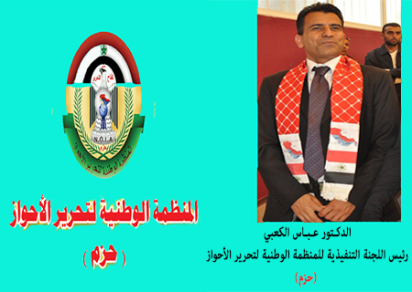
حمل رئيس المنظمة الوطنية لتحرير الأحواز «حزم» الدكتور عباس الكعبي الدولة الفارسية ما يتعرض له الشعب الأحوازي العربي من قمع وتهجير واعتقالات، ضحاياها تشهد بها السجون الإيرانية، لافتا إلى أن الأحوازيين يواجهون خطر الإبادة الجماعية والتطهير العرقي والعنصرية البغيضة والتهجير القسري للسكان والإعدامات داخل السجون .
 
وأشار رئيس المنظمة الوطنية لتحرير الأحواز إلى أن الاقتصاد الإيراني يعتمد على ثروات الأحواز بنسبة 92 %، مبينا أن الأحوازيين لن يسمحوا للدولة الفارسية باستخدام ثرواتهم لنشر الخلايا الإرهابية في الوطن العربي. وإلى نص الحوار:
 
• هل لنا أن نتعرف على دور المنظمة الوطنية للتحرير (حزم) في القضية الأحوازية؟
 
•• للمرة الأولى في التاريخ النضالي الأحوازي تتآلف الأغلبية الساحقة للقوى الوطنية الأحوازية فرادى ومجموعات فتشكل منظمة وطنية عريضة بحجم المنظمة الوطنية لتحرير الأحواز (حزم)، والتي تساهم بإعداد مشروع أحوازي وحدوي بهذا الحجم، إذ قدمت المثال للوحدة الوطنية الأحوازية والتمثيل الشرعي للقضية الأحوازية نظرا لمشاركة أكثر من 90 % من القوى الوطنية الأحوازية المنبثقة جميعها من رحم شعبنا الأحوازي، ويؤكد المشروع الأحوازي مشروعية القضية العربية الأحوازية وعدالتها، ويدحض بقوة كل الادعاءات الباطلة للدولة الفارسية بملكيتها الأحواز، كما يبرهن الرفض المادي والفعلي لشعبنا الأحوازي للتواجد الأجنبي الفارسي.
 
• ما هو موقف الدولة الفارسية من المنظمة؟
 
•• كعادتها، ناصبت الدولة الفارسية العداء لمنظمة حزم ونعتتها بالإرهابية تارة والمخربة تارة أخرى فأدرجت عددا من شخصياتها ضمن قوائم المطلوبين وعملت على تشويهها في داخل الأحواز، وأصدرت اللجنة الأمنية التابعة للبرلمان الفارسي وثيقة سرية تضم قائمة بأسماء عدد من شخصيات منظمة حزم على أنهم مطلوبون للحكومة والشعب وذلك لتبرير ملاحقتهم ومطاردتهم أو اغتيالهم.
 
• أين يقع مقر المنظمة ومن يقف خلف دعمها؟
 
•• أعلنت منظمة حزم عن انبثاقها من عاصمة جمهورية مصر العربية في الخامس عشر من الشهر الأول لعام 2010، وكان لها مكتب في القاهرة، ورغم انتشار ممثلي المنظمة وأعضائها في العديد من القارات والدول بما في ذلك بعض الدول العربية، إلا أنها تفتقر للحاضنة الرسمية ونتطلع أن تكون أولى الحاضنات لمنظمة حزم، إحدى الدول العربية الشقيقة.
 
أما الدعم، فشعبنا العربي الأحوازي يعد الداعم والمساند الأول والأساس للمنظمة خاصة أن المنظمة تعبر عن تطلعاته نحو التحرير والاستقلال، ومنذ نشأتها حتى يومنا هذا، تعتمد المنظمة بالكامل على الإمكانات الذاتية الأحوازية.
 
• الاستقلال حق مشروع للشعب العربي الأحوازي، فما هي الجهود التي تبذلونها من أجل الاستقلال وإعلان دولة الأحواز العربية والتخلص من السيطرة الفارسية؟
 
•• بموازاة الجهود الحثيثة التي تبذل في الداخل، فإننا نبذل جهودا مماثلة عربيا ودوليا، فعلى الصعيد العربي، لم نترك بوابة عربية إلا وطرقناها مرارا وتكرارا، إذ أطلعنا كافة أشقائنا العرب من حكومات ودول وأحزاب وكذلك جامعة الدول العربية على تفاصيل قضيتنا وما يتعرض إليه شعبنا الأحوازي من مظالم واضطهاد على يد الاحتلال الأجنبي الفارسي، فطالبنا كافة الأشقاء العرب بمساندة قضيتنا ونصرتها، مبينين مدى أهمية الأحواز في الأمن القومي والاقتصادي العربي، أما دوليا، فاتصلنا بالعديد من الدول الأوروبية والتقينا بالعديد من الشخصيات الرسمية الدولية، فتم عرض ملف الأحواز على البرلمان الأوروبي والعديد من البرلمانات التابعة للدول الأوروبية ومجلس حقوق الإنسان التابع لهيئة الأمم المتحدة ومختلف المنظمات الحقوقية الدولية، إضافة إلى العديد من المراسلات الموجهة إلى الأمانة العامة لهيئة الأمم المتحدة والأطراف الدولية الرسمية، كما لم نترك فرصة إلا ووظفناها للتعريف بقضيتنا على المستوى الإعلامي والمشاركات في المؤتمرات والندوات والمظاهرات العربية والدولية.
 
• لا شك أن الشعب العربي الأحوازي تعرض للكثير من الضغوط والاعتداءات على أبنائه، فهل لنا معرفة البعض من تلك التجاوزات؟
 
•• كثيرة هي الانتهاكات المادية والكثير منها يرتقي إلى مستوى الجريمة كالإبادة الجماعية والتطهير العرقي والعنصرية البغيضة تجاه الأحوازيين العرب والتهجير القسري للسكان والإعدامات داخل السجون وأمام الملأ وتجفيف الأنهر وقطع الأرزاق وتدمير البيئة والتلويث المتعمد للمياه ونشر السموم والأوبئة والأمراض في الأحواز وقطع مياه الشرب والكهرباء عن المدن الأحوازية، وكذلك حرمان الشعب العربي الأحوازي من كافة حقوقه الأساسية والمدنية والإنسانية مثل الحق في الملكية، الحق في التقاضي، الحق في التعليم، الحق في الرعاية الصحية، الحق في الديانة والحق في الإقامة والتنقل، فجميع هذه الحقوق مسلوبة من الشعب العربي الأحوازي، وكذلك نهب الثروات الطبيعية الأخرى كالنفط والغاز والمعادن، فالأحواز تؤمن 90 % من إجمالي صادرات إيران النفطية كما تؤمن نفس النسبة من إجمالي صادرات إيران من الغاز الطبيعي، وبالمجموع يعتمد الاقتصاد الإيراني على ثروات الأحواز بنسبة 92 %، كذلك تغيير تسمية الوطن من الاسم العربي (الأحواز) إلى تسمية فارسية وهي خوزستان، فضلا عن تغيير أسماء كافة المدن والبلدات والقرى والمواقع من العربية إلى الفارسية، ناهيك عن كون الشعب العربي الأحوازي هو الشعب الوحيد في العالم الذي تحرم عليه حتى التسميات باللغة العربية بدافع عنصري فارسي وتفرض عليه التسميات الأجنبية الفارسية.
 
• قامت الحركة الأحوازية بتفجير أنابيب النفط، هل يعني ذلك بداية لهذه الحركة أم إيصال صوتكم للعالم بشكل أكبر؟
 
•• نفذت حركة النضال العربي لتحرير الأحواز والتي ساهمت في تأسيس منظمة حزم، تلك العملية بالتزامن مع يوم الشهيد الأحوازي وكذلك الذكرى 11 لانطلاقتها، ووفقا لتصريح رئيس الحركة أحمد مولى فإن العملية جاءت ردا على الاعتداءات الإيرانية على أشقائنا في العراق وسورية واليمن وكذلك ردا على اعتداءات إيران على المقرات الديبلوماسية السعودية في طهران ومشهد، وبلا شك ردا على تطاول المحتل الفارسي على شعبنا العربي الأحوازي. والعملية ليست الأولى بل هي استمرار لسلسلة عمليات نفذتها المقاومة الوطنية الأحوازية، وتقع أنابيب النفط المستهدفة في الأحواز بينما يستخدمها العدو المحتل ويوظف عائداتها لقمع شعبنا الأحوازي ودعم خلاياه الإرهابية في الوطن العربي وميليشياته في العراق وسورية واليمن، كما يوظفها لدعم مشروعه التوسعي الطائفي في الوطن العربي، وعليه فإن استهداف أنابيب النفط وتفجيرها كثيرا ما يساهم في عرقلة تلك المشاريع الإرهابية للدولة الفارسية، كما أن شعب الأحواز من حقه أن يوصل صوته إلى العالم عبر مختلف الطرق السياسية والإعلامية، كما أنه يخاطب العدو بلغة البندقية لطالما لا يفهم العدو إلا هذه اللغة.

EIGHT DIALYSIS PATIENTS AT ONE AHWAZ HOSPITAL DIE WITHIN A WEEK


Eight Ahwazi patients who received kidney dialysis treatment at the Sina Hospital in the Ahwazi regional capital, Ahwaz, last week died within a few days.  Experts are warning that the death toll may ri
se with other patients who received dialysis there on the same day still undergoing treatment.
The eight were among 50 patients who attended the hospital’s renal dialysis unit for treatment on Monday, July 25.   Although none of the patients experienced any problems at the time, all being discharged following their dialysis sessions,   a number were readmitted the next day suffering various severe symptoms, including severe nausea, vomiting, and diarrhoea. Eight of the patients, all aged between 40 and 60, subsequently died between Wednesday and Friday of the same week
Speaking to the Iranian state agency, Tasnim News, the hospital director Dr.  Seyed Saheb Hosseini said that the hospital is still conducting investigations to determine the cause or causes of the eight deaths.  Dr. Hosseini said that he refused to rule out the possibility of the province’s severe air pollution being a factor in the deaths, adding that the investigation, being carried out as a matter of urgency, would determine the cause.
The Sina Hospital is the only hospital in the city which provides dialysis to the poorest Ahwazis (with the majority of Ahwazis classified as living below the poverty line), with most of those suffering from kidney problems unable to afford the cost of treatment or drugs at other private medical facilities in the region.
Health officials in Ahwaz (with the region also known by a Farsi name, Khuzestan province) have previously highlighted the problems suffered by dialysis patients at the hospital, where the equipment is dilapidated and ageing, and there are insufficient numbers of beds.   These problems are exacerbated by the insufficient funding received by the Kidney Foundation of Iran, the only national body dealing specifically with kidney-related illnesses.
Following the deaths of the dialysis patients, Ahwazi activists launched a social media protest campaign to raise awareness of the case and protest against Iranian health minister Dr.  Seyed Hassan Ghazizadeh Hashemi, who the activists accuse of failing to take any serious action to protect Ahwazi dialysis patients.

Rahim hamid